
YOUR FIRST 5 STEPS
THIS IS WHERE IT ALL BEGINS
01
Take one lesson before buying any gear — it changes everything you think you know.
02
Start with a par-3 course or driving range, not an 18-hole championship course.

03
Borrow or hire clubs first — don't spend big until you know what you enjoy.

04
Learn to pick up your ball — pace of play matters more than your score.
05
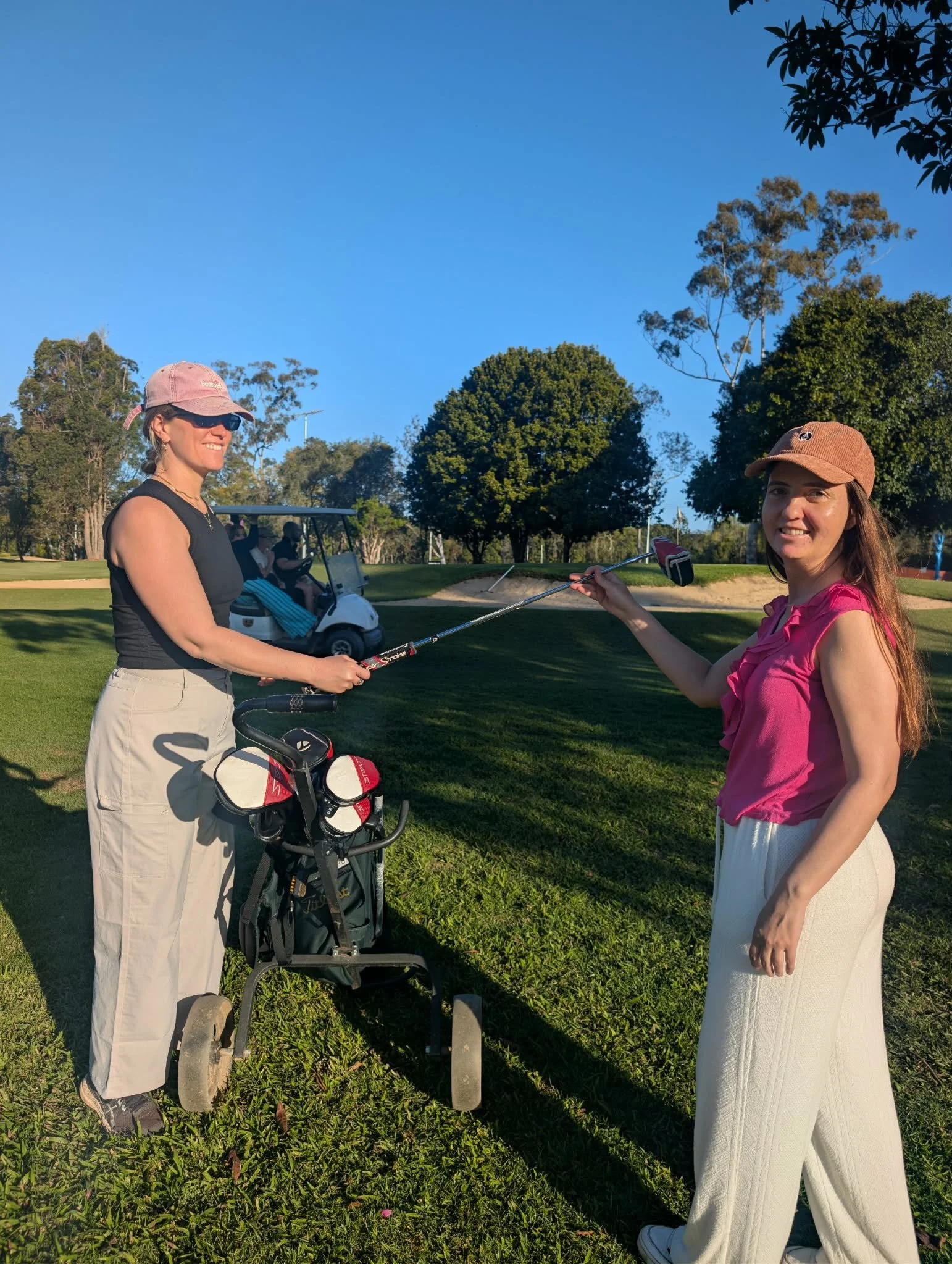
Go with a friend. Golf is better and far less intimidating — with a Gal beside you.
GOLF
ETIQUETTE
-
Keep up with the group in front of you — not ahead of the group behind.
If you’re falling behind, wave the group behind you through.
Nobody expects perfection; everyone expects effort to keep moving.
-
Most clubs have a dress code — collared shirts, tailored shorts or skirts, golf shoes or soft spikes.
Check the club’s rules before you go.
When in doubt, dress smart and you’ll never go wrong.
Most courses will accept Golf brand attire.
-
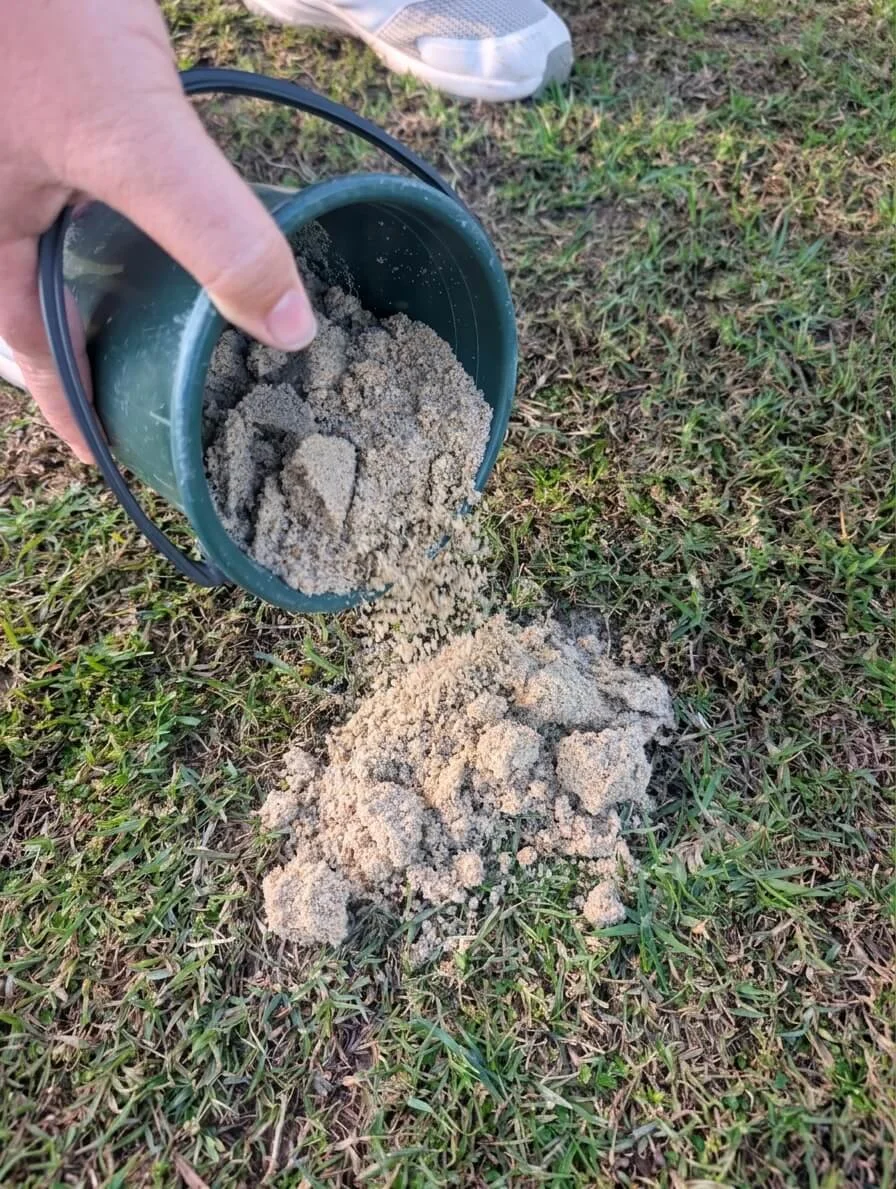
Repair your divots on the fairway, and make sure you take a sand bucket with you.
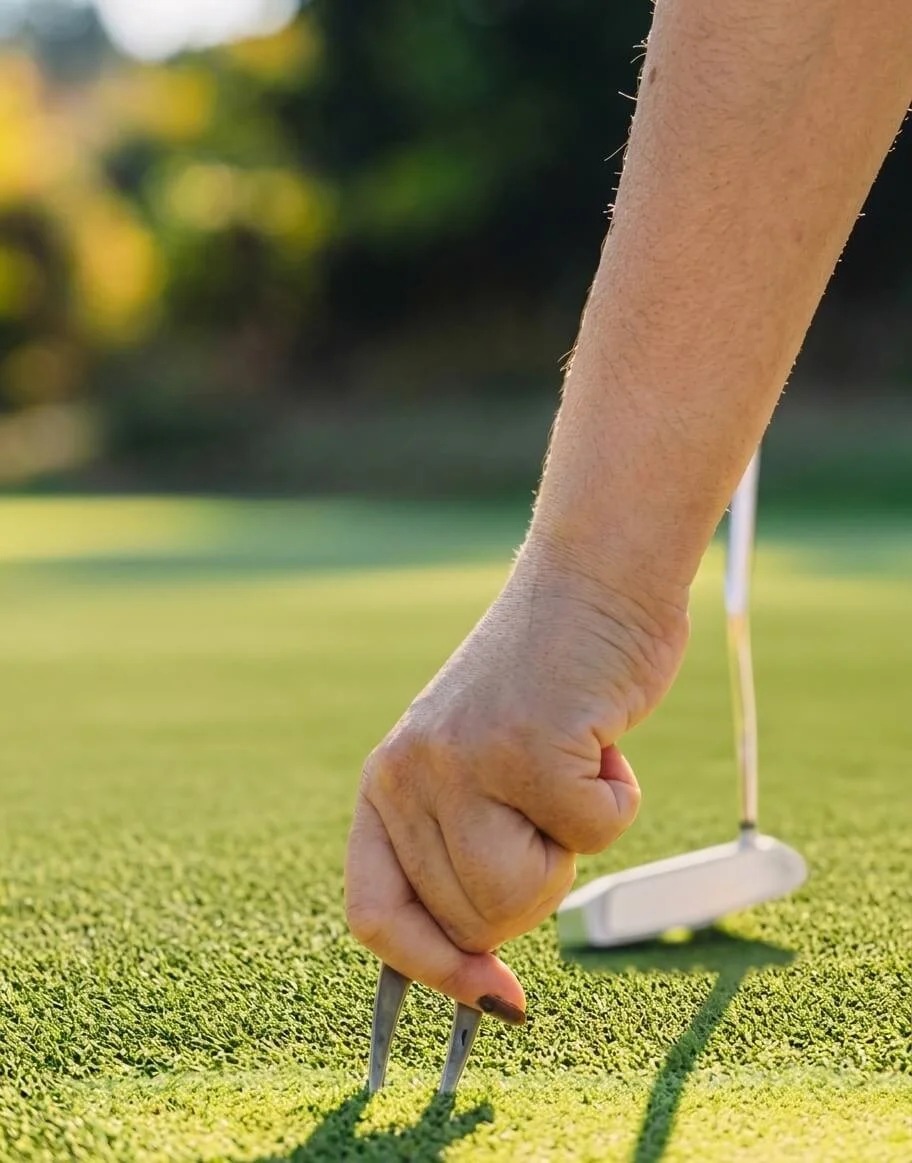
Fix your pitch marks on the green, and rake the bunker after you’ve played from it.
Leave every hole in better shape than you found it.
-
Stay still and quiet when another player is addressing the ball or swinging.
Stand out of their eyeline — never directly behind them or in their peripheral vision.
Your attention is part of the respect.

lets talk golf
... SHE SAID WHAT?
GOLF LINGO
Golf lingo can feel like a whole new language when you’re just starting out — and nothing’s more intimidating than nodding along pretending you know what a ‘birdie’ or a ‘bogey’ actually means. We’ve got you. Here are the TOP terms every beginner needs to know — so you can walk onto the course feeling confident, informed and ready to hold your own conversation.
-
ADDRESS — The position you take before making a swing.
ALBATROSS — Three strokes under par on a hole.
APPROACH SHOT — A shot played toward the green.
AWAY — The ball furthest from the hole, played first.
BACK NINE — Holes 10–18.
BACKSPIN — Spin that makes the ball stop or roll backward.
BIRDIE — One stroke under par.
BOGEY — One stroke over par.
BUNKER — A sand-filled hazard.
CADDIE — Someone who carries clubs and gives advice.
CHIP — A short shot that rolls onto the green.
CLUBHOUSE — The main building at a golf course.
CONDOR — Four strokes under par.
DIVOT — A piece of turf removed by a shot.
DOGLEG — A hole that bends left or right.
DOUBLE BOGEY — Two strokes over par.
DRAW — A controlled shot that curves right to left for a right-handed player.
DRIVER — A club designed for long tee shots.
DRIVE — A shot, usually played from the tee.
EAGLE — Two strokes under par.
EVEN — A score equal to par.
FADE — A controlled shot that curves left to right for a right-handed player.
FAIRWAY — The closely mown route from tee to green.
FLAG — The marker showing the hole’s location.
FORE — A warning shouted when a ball may hit someone.
FRONT NINE — Holes 1–9.
GIR — Green in regulation: reaching the green within the expected number of strokes.
GREEN — The smooth putting surface around the hole.
GIMME — A short putt informally conceded by playing partners.
GRIP — How you hold the club, or the covering on its handle.
HANDICAP — A number representing playing ability.
HAZARD — An area such as sand or water that makes a shot more difficult.
HOLE IN ONE — Completing a hole with one stroke.
HOOK — A strong right-to-left curve for a right-handed player.
IRON — A club used for controlled approach shots.
JAB — A short, abrupt putting stroke.
KICK — A bounce or change of direction after the ball lands.
LAG — A long putt played close to the hole.
LATERAL HAZARD — A water hazard marked so relief can be taken to the side.
LIE — How the ball is resting on the ground.
LINKS — A traditional coastal golf course style.
LIP — The edge of the hole or bunker.
LOFT — The angle of a clubface.
MATCH PLAY — A format scored by holes won or lost.
MEDAL PLAY — A format scored by total strokes.
MULLIGAN — An informal second chance shot.
NASSAU — A match format usually split into front nine, back nine and overall scores.
NET SCORE — Gross score adjusted for handicap.
OUT OF BOUNDS — An area outside the course boundary.
PACE OF PLAY — The speed at which a group completes its round.
PAR — The expected score for a hole or course.
PIN — Another name for the flagstick.
PITCH — A high, soft shot toward the green.
PROVISIONAL — A second ball played when the first may be lost or out of bounds.
PUTT — A stroke played along the ground on the green.
PUTTER — A club designed for putting.
ROUGH — Longer grass beside the fairway.
ROUND — A complete set of holes played.
SAND SAVE — Getting up and down from a bunker in two strokes or fewer.
SCRATCH — A player with approximately zero handicap.
SHANK — A shot struck near the club’s heel that flies sharply right for a right-handed player.
SLICE — A shot that curves strongly left to right for a right-handed player.
STROKE — A forward movement of the club intended to hit the ball.
STROKEPLAY — A format scored by total strokes.
STABLEFORD — A points-based scoring format.
TEE — A small peg used to raise the ball for a shot.
TEE BOX — The area where a hole begins.
TEMPO — The rhythm and speed of a swing.
TIGER LINE — A bold or direct route around an obstacle.
UNPLAYABLE LIE — A ball position from which you choose to take relief.
VARDON GRIP — An overlapping hand grip.
WAGGLE — A small club movement before the swing.
WATER HAZARD — A body of water that affects play.
WEDGE — A short-game club with high loft.
WHIFF — A swing that misses the ball.
WINTER RULES — Temporary local rules that improve a ball’s lie in poor conditions.
YARDAGE — The distance to a target.
YIPS — Involuntary movements that affect a stroke.
ZONE — A focused state where your swing and decisions feel connected.
-
BIRDIE — One under par.
BOGEY — One over par.
BUNKER — A sand-filled hazard.
DIVOT — Turf removed by a shot.
DRIVE — A long shot, usually from the tee.
FAIRWAY — The short grass leading to the green.
FORE — A warning that a ball may be heading your way.
GREEN — The smooth surface around the hole.
HANDICAP — A number showing playing ability.
MULLIGAN — An informal second chance.
PAR — The expected score for a hole.
PACE OF PLAY — Keeping your group moving at a steady speed.
PUTT — A stroke played along the green.
ROUGH — Longer grass beside the fairway.
TEE BOX — The starting area for each hole.
The score that matters
HANDICAP BREAKDOWN
A handicap is a number that represents your playing ability and helps golfers of different levels compete fairly. Think of it as shots added to par: on a par-72 course, a handicap of 20 gives you a target score of 92, while a handicap of 5 gives you a target score of 77.
-
Choose the option that suits how you want to play.
Sign up and provide the required details.
Complete the registration and receive your Golf Australia number.
Submit scorecards from eligible rounds as required.
Check your handicap and keep playing to build a scoring record.
-
No. You can play without one, and our events don’t require a handicap !
Beginner Tip
You do not need to wait for a perfect round. A handicap is designed to help you track progress as your game develops.
-
A 9-hole score can be used toward your handicap record and combined with another 9-hole score to create an 18-hole score.
-
You can receive an initial handicap after submitting the required number of eligible scores under the current Golf Australia rules. Check your handicap provider for the latest requirement.
-
The maximum handicap for women is 54.
-
Join a club via GolfLink.
Join Social Golf Australia.
Use Access Golf.
Join Future Golf.